

Postdoctoral Researcher (f_m_x) – Adaptive Digital Twin Prototypes for EGS Systems GFZ Helmholtz Centre for Geosciences

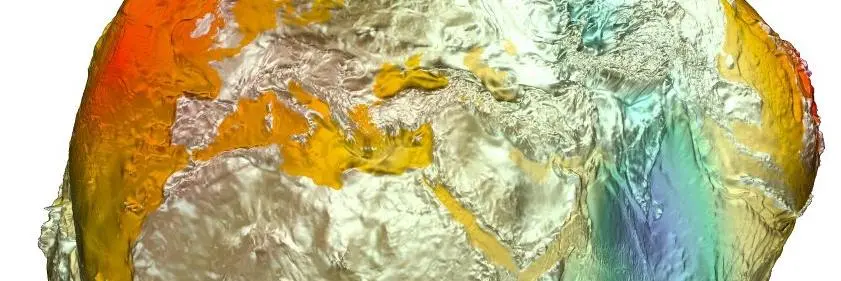
GFZ is Germany's national centre for solid Earth research. We advance the understanding of dynamic processes to address global challenges, from mitigating the impacts of natural hazards and sustaining our habitat amid global change to responsibly managing georesources. We are part of the Helmholtz Association, the largest German scientific organisation. With around 1,200 employees as well as ca. 500 guest researchers, we contribute to the Helmholtz Research Field Earth and Environment, aligning cutting-edge research with societal relevance and international collaboration. Our work integrates multidisciplinary studies across Earth's system components, leveraging advanced technologies and infrastructure to research solutions and to transfer our knowledge to society. We are doing this in line with our vision: "Taking the pulse of our Earth to safeguard a habitable planet".
Within the EU-funded project UPLIFT (Unlocking Petrothermal Lithologies through Innovative Fracture Technologies) in section 4.5 "Subsurface Modelling" (department "Geosystems"), we are looking for a:
Postdoctoral Researcher (f_m_x) – Adaptive Digital Twin Prototypes for EGS Systems
UPLIFT brings together key European EGS industry and research institutions to demonstrate, at Czechia’s leading energy research site RINGEN, how multi-stage Enhanced Geothermal System (EGS) stimulation can be efficiently implemented in Europe, while reducing technical, social, and environmental risks. This includes adaptive stimulation designs for more efficient and safe permeability enhancement and micro-turbine drilling to improve reservoir access. To support this, we will investigate the self-propping behaviour of European basement rocks through laboratory experiments, benchmark these results against acid and proppant-based stimulation methods, and compare water-only with proppant-based stimulation treatments in the Bedretto Underground Laboratory. Additionally, we will develop high-fidelity, physics-based Digital Twins to guide stimulation designs, as well as fast surrogate models for real-time operational decision-making.
The Postdoc position offers the opportunity to develop a high-fidelity, adaptive Digital Twin (DT) prototype of an EGS to support planning of field operations and to demonstrate near-real-time simulations of stimulation treatments and system responses via an AI-physics-based surrogate DT of the EGS.
Your responsibilities:
- Collect and coordinate with the partners available data on the local geology, material properties, and boundary conditions of the investigated site
- Integrate the data into a multi-physics reservoir simulator to provide a high-fidelity and physically-realistic digital representation of the reservoir’s thermo-hydro-mechanical response
- Validate the model against operational data from the project partners
- Construct a representative data set of expected system variability to train and validate a physics-preserving AI-driven surrogate model for real-time use in the field demonstrator
- Use the surrogate model to identify the most influential parameters and properties to quantify the resulting system uncertainties to inform and steer the stimulation strategies for the targeted reservoir
- Seamless integration (input) of the acquired field data into the simulation environment to help identify best operation practices
- Seamless integration (output) of the DT results to the operations team and seismic team to assist optimal and flexible control algorithms to steer the field experiments
About You:
Essential Qualifications:
- Master's degree and PhD in Earth, Environmental or Physical Sciences, or in a related field
- Advanced expertise in numerical modelling (specifically relevant for thermal hydraulic and mechanical reservoir analysis) and complex simulation environments (familiarity with HPC concepts is an asset)
- Familiarity with basic coding concepts (e.g. basic control and data structures, object-oriented programming, troubleshooting and debugging) specifically for C++ and Python (Julia) programming languages
- Demonstrated capacity for international teamwork and excellent communication skills
Desirable Qualifications:
- Creative and critical thinking, and the ability to publish, are demonstrated by a record of original and innovative publications
- Proficiency in spoken and written English. German language skills are useful, but no requirement
- Excellent communication skills
What we offer:
- Ambitious and varied tasks in a dynamic and international research environment
- State-of-the-art equipment
- Public service benefits
- Extensive training opportunities
- Professional career advice offered by our in-house Career-Centre
- Flexible working hours and conditions
- Support with finding a good work-life balance offered by benefit@work
- Institute day-care centre on site
- Working at the Albert Einstein Science Park on the Telegrafenberg in Potsdam
- Workplace within walking distance of Potsdam main train station, or just a short ride on the shuttle bus
Start date: As soon as possible
Fixed-term: 36 months
Salary: The position is classed as salary group 13 according to “TVöD Bund (Tarifgebiet Ost)”. The salary group is determined on the basis of the Collective Wage Agreement and the respective personal qualifications.
Working hours: Full-time (currently 39 h/week); The position is generally suitable for part-time work.
Place of work: Potsdam
Apply
Have we piqued your interest?
If so, we look forward to receiving your application by 17th July 2026. Please use our online application form only.
Required documents:
- Letter of motivation detailing your background, interest in the position and general career goals
- Curriculum Vitae
- Academic credentials (mark sheets and degree statements/certificates)
- Short abstract of the PhD thesis or equivalent
- References: the names and contact details of at least two referees
The GFZ actively promotes diversity and explicitly welcomes applications from all qualified individuals, regardless of ethnic and social origin, nationality, gender, sexual orientation and identity, religion/belief, age and physical characteristics. We also promote an inclusive working environment in which everyone can fully develop their own talents. Anyone who has been recognised as severely disabled will be given preferential consideration in the event of equal suitability and qualification in accordance with the provisions of the German Social Code IX. If you have any further queries regarding gender equality, please do not hesitate to contact our Equal Opportunities Officer.
“Diversity in perspectives” is one of GFZ's core values. As an integral part of supporting diversity at our centre, we actively promote women in science and in leadership positions. We, among others, do this through our gender equality plan and the cascade model measures, which we actively implement to enable sustainable equal opportunities in academic career paths. The GFZ thus committedly strives for gender equality in science, including in leadership positions, and strongly encourages women to apply.
Data protection information for applicants
In case of any further queries regarding the field of activity, please contact Dr. Mauro Cacace via email. If you have any general questions about the application process, please contact our recruiting team at our phone number +49 331 6264‑28787.



Reference number
11253
Additional actions
About the employer
GFZ Helmholtz Centre for Geosciences

GFZ Helmholtz Centre for Geosciences
The GFZ is Germany’s national center for research on the solid Earth. We advance the understanding of dynamic processes to address global challenges—ranging from mitigating the impacts of natural hazards and preserving our environment in times of global change to the responsible management of natural resources. We are a member of the Helmholtz Association, Germany’s largest scientific organization. With approximately 1,200 staff and around 500 visiting researchers, we contribute to the Helmholtz research area “Earth and Environment,” combining cutting-edge research with societal relevance and international collaboration.
Our work integrates multidisciplinary studies of Earth’s systems and leverages advanced technologies and infrastructures to explore solutions and bring our knowledge into society. We do all this in line with our vision: “In tune with the Earth—to preserve it as a habitable planet.”
Benefits
Receive similar jobs by e-mail?
Subscribe to our job mail!
Similar Jobs
GFZ Helmholtz Centre for Geosciences
GFZ Helmholtz Centre for Geosciences
GFZ Helmholtz Centre for Geosciences